
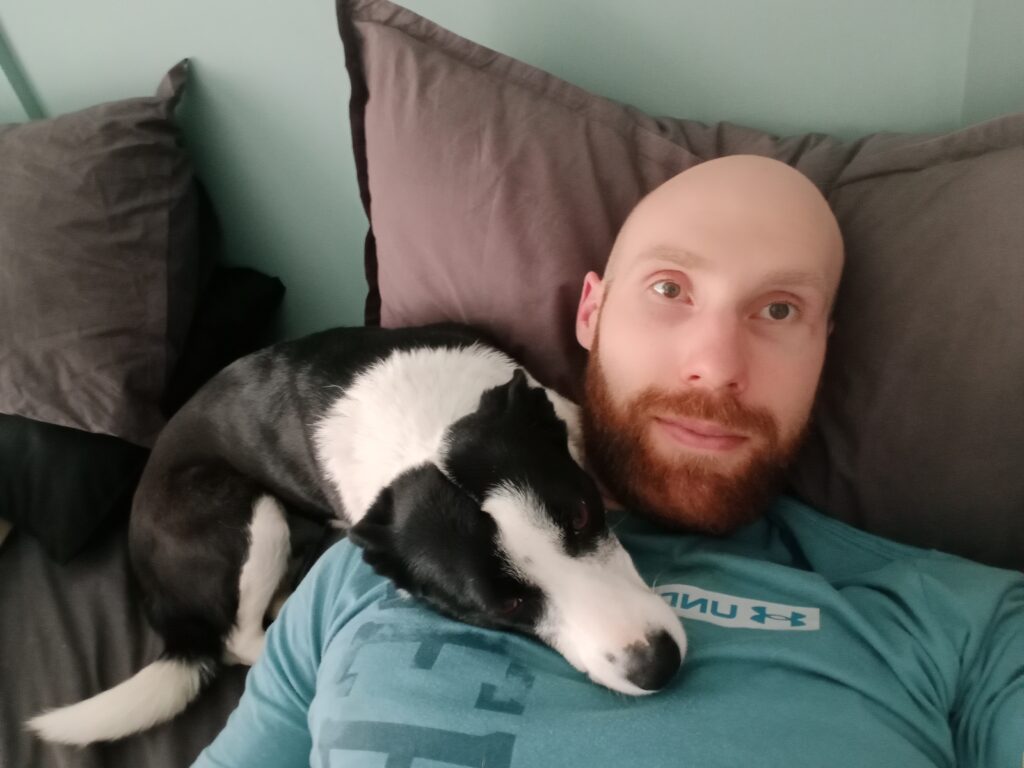
Hello! My name is John-Willy Pelser. Thanks for taking the time to getting to know my journey in a bit more depth 🙂 I hope my story is one that would encourage you to not only share yours, but be proud of it and live it unashamed.
I was raised as an evangelical Christian, and from an early age, I was marked by an unwavering dedication to my faith. You could even say I was a fundamentalist, wholeheartedly embracing the teachings and convictions of the church.
But as I ventured into my mid-20s, a relentless curiosity began to stir within me. I yearned to deepen my connection to the divine to such profound levels that I could see and hear God in the tangible world around me. I was on a mission, and it was a mission that would change the course of my life.
At 26, I recommitted my life to Christ, ready to embark on a journey that I believed would lead me to the very heart of the divine. But a year passed, and my quest seemed to be met with silence. Frustration and doubt began to creep in, pushing me to explore unconventional paths.
At 27, I took a leap into the unknown. I started experimenting with practices like meditation, psychedelics, yoga, and breathwork, hoping to unearth a deeper spiritual connection. Simultaneously, I embarked on a quest to understand Christianity more profoundly, attending courses, meeting with pastors, and diving into church activities. But the answers I sought remained elusive, leaving me unsatisfied and hungry for more.
During this phase, I stumbled upon the wisdom of spiritual luminaries like Ram Dass and Sadhguru, and I delved into the rich teachings of eastern philosophy. The works of Alan Watts, the Tao Te Ching, and the Bhagavad Gita found their way into my life. As I explored mysticism, a new age spirituality began to shape my belief system. I was navigating a path between two worlds, embracing new perspectives while still clinging to my belief in God as a universal source of life.
By the time I reached 28, the seeds of doubt began to sprout. I immersed myself in the writings of prominent atheist thinkers such as Richard Dawkins, Christopher Hitchens, Sam Harris, and Daniel Dennett. I eagerly consumed their books and watched countless hours of atheist YouTube content. I began to explore philosophical works by existentialist giants like Camus and Sartre. My reading expanded to include psychology, evolution, and the intricacies of human belief systems. I engaged in passionate debates about the existence of God, wrestling with the age-old arguments for and against.
Eventually, the truth became undeniable, and at 29, I stepped into a new chapter of my life as an atheist. Yet, the journey didn’t end there. The absence of belief left me grappling with existential questions, and the world around me seemed devoid of meaning and purpose. My mental health began to deteriorate, and the darkness within me grew.
Contemplating the void, I sought the help of a psychologist and discovered the concept of religious trauma. I realized that even though I no longer believed, I carried deep-seated fears of hell, the rapture, and the notion of a purposeless life. It was a profound realization, one that required healing and transformation.
During this period, I encountered the works of Bart Ehrman, a renowned New Testament scholar and atheist. His teachings gradually unraveled the unconscious fears instilled by Christianity. I began to explore the Bible, Christianity, and all religions from a naturalistic, critical, and rational perspective. With the support of my therapist and my continued exploration of philosophy, I embarked on a journey to redefine my purpose and rekindle my will to live.
My newfound path led me to the study of psychology, with a mission to shine a light on the harm that religion can inflict, especially on children, and to offer a guiding hand to those who have walked away from their faith, feeling adrift without a compass.
In a moment of profound courage, I chose to reveal my truth to my parents, a daunting task that ultimately liberated me. Their unwavering love and support strengthened our bond, and our conversations became a testament to the power of open dialogue and unconditional acceptance.
This journey was not without its losses. I bid farewell to friends who could not walk beside me as I left Christianity behind. In their absence, I discovered new friendships—ones founded on the bedrock of unconditional acceptance, shared passions for science, curiosity, philosophy, art, music, and the remarkable tapestry of life.
My purpose now is clear—to be a beacon of hope for those navigating the labyrinth of deconstructing their faith. To show them the path to freedom, to liberation, and to a life that is vibrant and meaningful. I am here to remind them that the journey is worth it and that they are not alone in the dark. It’s a mission that fills my heart with purpose and my soul with light.